//
AI Workloads Are Increasing Data Center Rack Density by 5x
3 Apr 2026 by Datacenters.com Artificial Intelligence
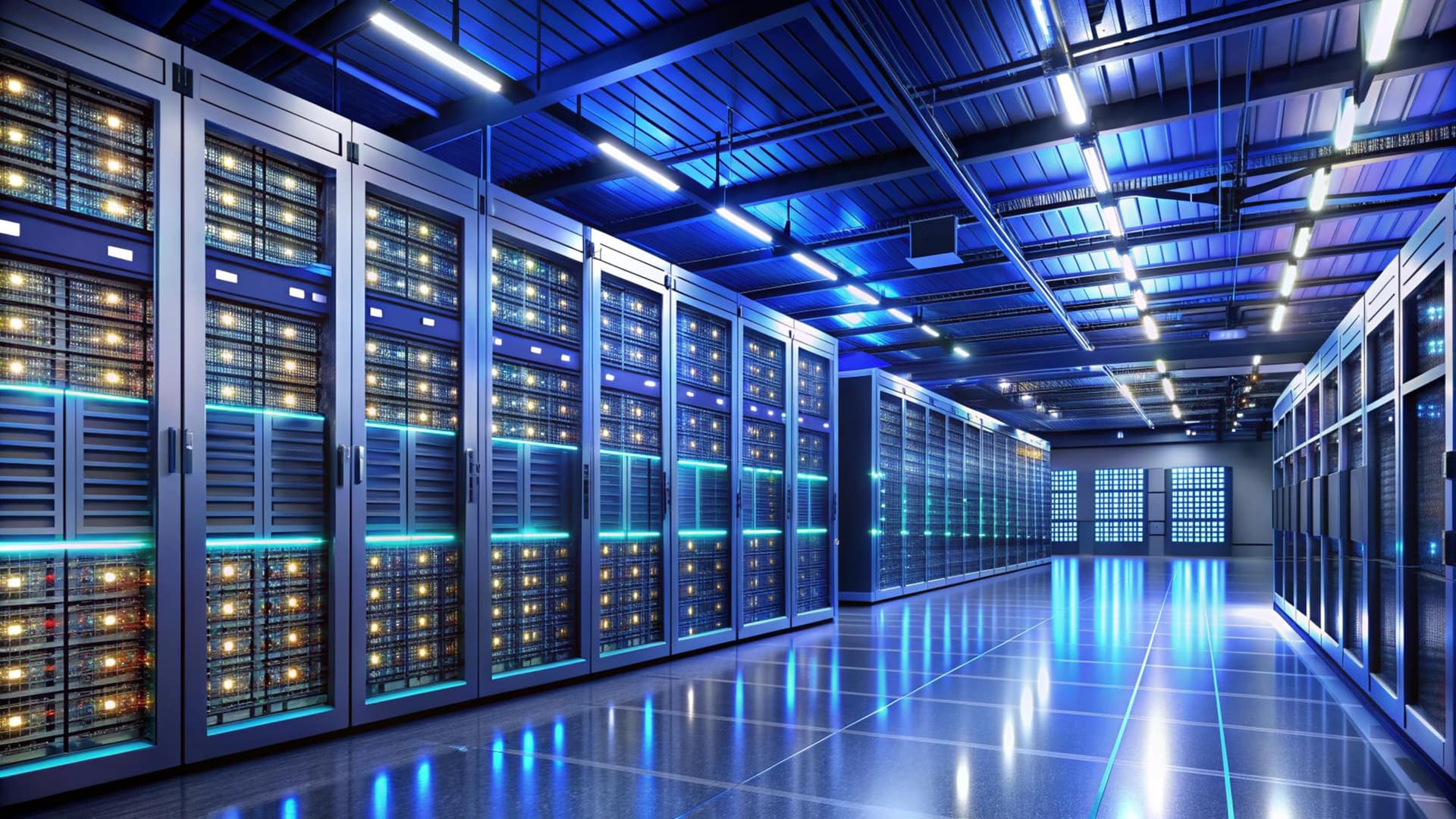
Artificial intelligence is fundamentally changing how data centers are designed, built, and operated. One of the most significant shifts is happening at the rack level, where power density is increasing at a pace the industry has never experienced before.
In traditional data center environments, rack densities typically ranged between 5 to 10 kilowatts. Even in more advanced enterprise deployments, densities rarely exceeded 15 to 20 kilowatts per rack. That standard is no longer relevant.
AI workloads are now pushing rack densities to 30, 50, and in many cases over 100 kilowatts per rack. In some next-generation environments, densities are approaching 5 times what was previously considered high-performance infrastructure.
This is not a marginal increase. It is a structural shift that is redefining the physical and operational limits of data centers.
From 10 kW to 50 kW and Beyond
The progression of rack density has accelerated rapidly in recent years. What took decades to evolve in traditional computing has shifted dramatically in the AI era.
Standard enterprise workloads once operated comfortably within low-density environments. Cooling, power distribution, and facility design were all optimized around predictable, moderate energy use.
Artificial intelligence has disrupted that model.
Modern GPU-based systems require significantly more power per unit than traditional CPUs. A single GPU can consume several hundred watts, and when deployed in clusters, the total power requirement per rack increases dramatically.
As companies scale AI workloads, racks are being filled with high-performance hardware that pushes density far beyond previous limits.
The move from 10 kilowatts to 50 kilowatts per rack is becoming common. In some environments, even higher densities are being deployed.
Why AI Requires Higher Density
AI workloads depend on parallel processing at scale. Training large models requires thousands of GPUs working together, processing massive datasets simultaneously.
To achieve this level of performance, hardware must be tightly integrated and physically concentrated. Distributing workloads across low-density racks would increase latency and reduce efficiency.
High-density racks allow for faster communication between processors, improving performance and reducing training time.
This concentration of compute is essential for modern AI systems. It enables faster iteration, more complex models, and more efficient use of infrastructure.
The trade-off is increased power consumption and heat generation.
Power Distribution Becomes More Complex
As rack densities increase, so does the complexity of power distribution within data centers.
Delivering 100 kilowatts to a single rack requires significantly different infrastructure than delivering 10 kilowatts. Power systems must be designed to handle higher loads while maintaining reliability and redundancy.
This includes upgrades to electrical systems, transformers, and distribution units. Facilities must be capable of supporting higher peak loads without compromising performance.
In many cases, existing data centers are not equipped to handle these requirements, leading to retrofits or the development of new facilities designed specifically for high-density workloads.
Power is no longer just about capacity. It is about precision and scalability.
Cooling Systems Are Being Redefined
The increase in rack density is placing enormous pressure on cooling systems. Traditional air cooling is reaching its limits in environments where racks exceed 50 kilowatts.
At higher densities, air alone cannot remove heat efficiently enough to maintain stable operating conditions. This has led to the adoption of liquid cooling technologies.
Direct-to-chip cooling and immersion cooling are becoming more common, allowing operators to manage heat more effectively and support higher densities.
These systems are not just enhancements. They are becoming requirements for AI infrastructure.
Cooling is now one of the primary constraints on how much compute can be deployed within a facility.
Space Efficiency and Infrastructure Optimization
Higher rack density also changes how space is utilized within data centers.
By concentrating more computing power into fewer racks, operators can reduce the physical footprint required for infrastructure. This can improve efficiency in markets where space is limited or expensive.
However, this efficiency comes with trade-offs. Higher densities require more advanced infrastructure, including enhanced cooling and power systems.
The balance between density and infrastructure complexity is a key consideration in data center design.
Operators must optimize for both performance and efficiency.
Impact on Colocation Providers
Colocation providers are adapting to support higher rack densities. Facilities are being upgraded to accommodate increased power and cooling requirements.
This includes redesigning data halls, upgrading electrical systems, and implementing advanced cooling technologies.
Providers that can support high-density deployments are better positioned to attract AI customers, including startups and enterprises deploying large GPU clusters.
The shift toward higher density is creating new opportunities within the colocation market.
It is also raising the bar for what facilities must deliver.
AI Is Redefining Infrastructure Standards
The increase in rack density is part of a broader transformation driven by artificial intelligence.
Infrastructure standards that were established over decades are being redefined in a matter of years. Power, cooling, and networking requirements are all evolving to support new workloads.
Data centers are becoming more specialized, designed specifically for high-performance computing environments.
This specialization is leading to new design approaches, new technologies, and new operational models.
The industry is adapting to a new reality where density is a defining factor.
Economic Implications of Higher Density
Higher rack density has significant economic implications.
On one hand, it allows operators to maximize the use of space and infrastructure, potentially reducing costs per unit of compute.
On the other hand, it increases the complexity and cost of building and operating data centers. Advanced cooling systems, upgraded power infrastructure, and specialized equipment all contribute to higher capital expenditure.
The economics of data center development are shifting, with density playing a central role in cost optimization.
Companies must balance the benefits of higher density with the costs associated with supporting it.
The Path Forward
The trend toward higher rack density is expected to continue as AI workloads grow.
Future deployments may exceed current density levels, pushing infrastructure requirements even further. Data centers will need to evolve to support these changes, incorporating new technologies and design approaches.
Innovation in cooling, power distribution, and hardware design will be critical in enabling this growth.
The industry is entering a phase where density is not just an optimization. It is a necessity.
A New Standard for Data Centers
The increase in rack density represents a new standard for data center infrastructure.
What was once considered high-density is now baseline. Facilities that cannot support these requirements risk becoming obsolete.
AI is driving this transformation, pushing infrastructure to new limits and redefining how data centers operate.
The shift is already underway, and its impact will continue to grow as AI adoption accelerates.

Author
Datacenters.com Artificial Intelligence
Datacenters.com provides consulting and engineering support around colocation, bare metal, and Infrastructure as a service for AI companies. Datacenters.com has developed a platform for Datacenter Colocation providers to compete for your business. It takes just 2-3 minutes to create and submit a customized colocation project that will automatically engage you and your business with the industry leading datacenter providers in the world.
Datacenters.com provides a platform to view and research all the datacenter locations and compare and analyze the different attributes of each datacenter. Check out our Colocation Marketplace to view pricing from top colocation providers or connect with our concierge team for a free consultation.
Talk to Expert


